
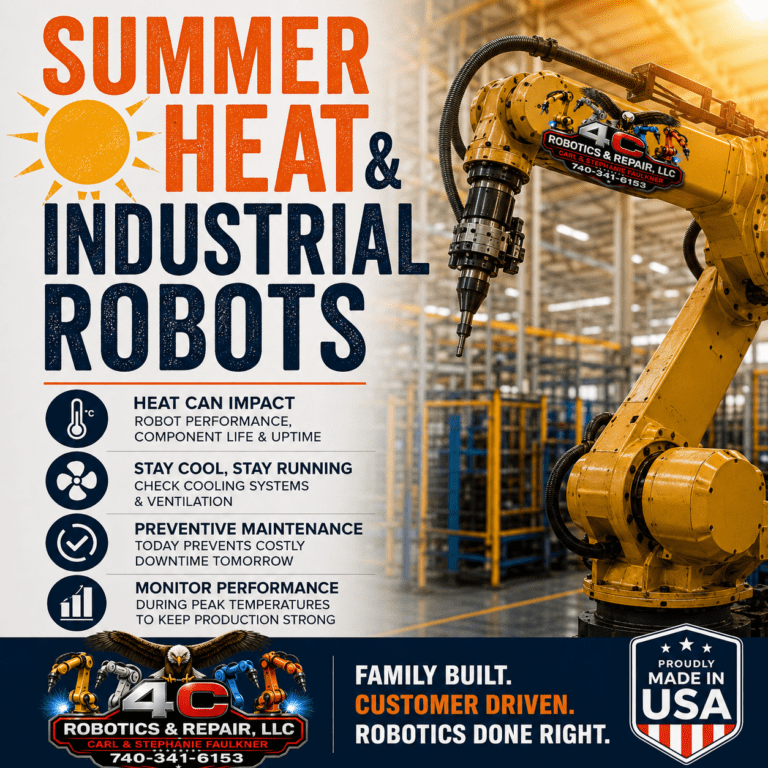
Summer Heat & Industrial Robots: Protecting Equipment During the Hottest Months of the Year
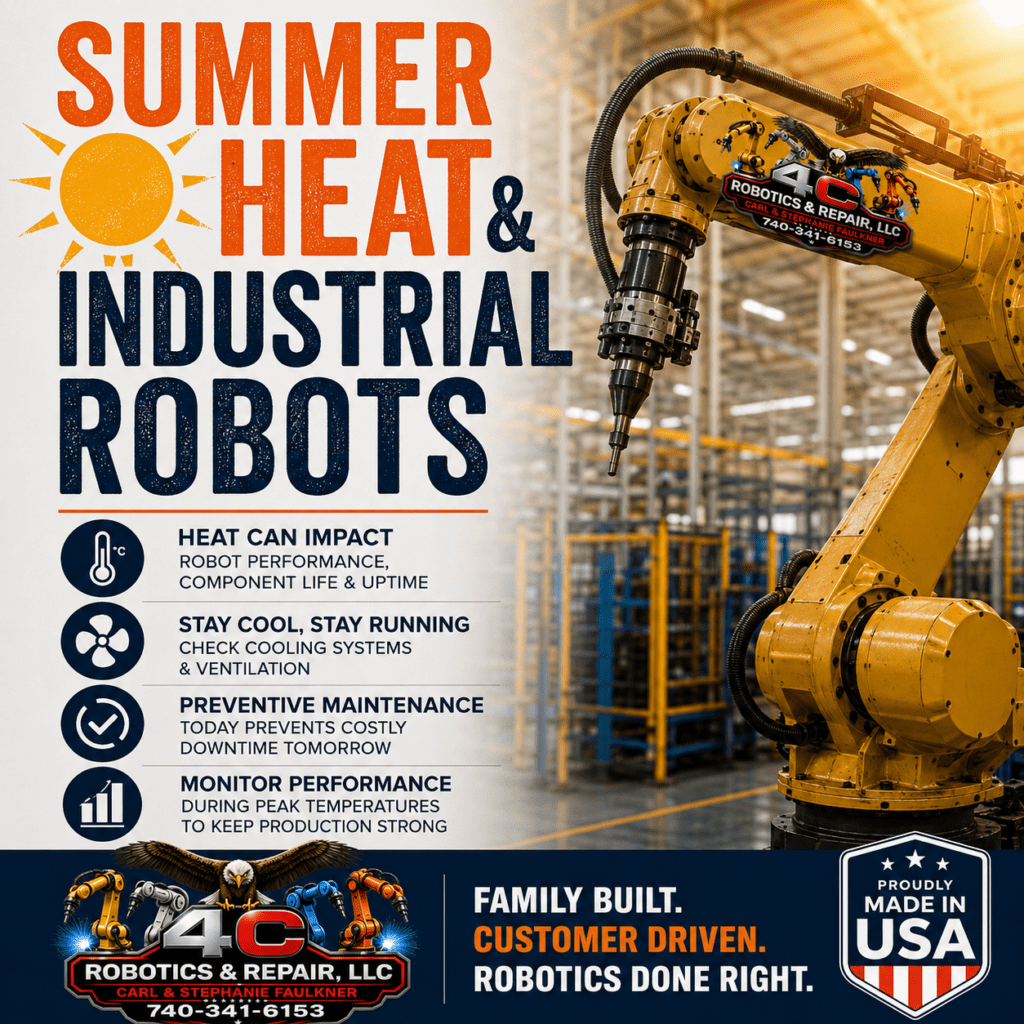
As temperatures rise during the summer months, manufacturing facilities face unique challenges in maintaining equipment reliability and production efficiency. Industrial robots are designed to operate in demanding environments, but excessive heat, humidity, and airborne contaminants can significantly impact performance, increase downtime, and shorten equipment life if proper precautions are not taken.
At 4C Robotics & Repair, LLC, we understand that protecting your robotic investment is critical to maintaining productivity and avoiding costly repairs. Summer is the perfect time to evaluate your robotic systems and ensure they are prepared to handle the additional environmental stresses that come with higher temperatures.
How Summer Heat Affects Industrial Robots
Industrial robots generate heat during normal operation. When surrounding temperatures increase, cooling systems must work harder to keep motors, drives, controllers, and electronic components within their recommended operating ranges.
Common issues caused by excessive heat include:
- Servo motor overheating
- Increased wear on cooling fans and filters
- Premature failure of electronic components
- Controller faults and unexpected shutdowns
- Reduced lubricant effectiveness
- Increased wear on cables and connectors
- Lower production efficiency and cycle performance
If left unchecked, these issues can lead to expensive repairs and unexpected production interruptions.
Warning Signs Your Robot May Be Overheating
Manufacturers should be alert for:
- Frequent robot fault codes
- Excessive controller cabinet temperatures
- Slower robot movements
- Unexpected production stops
- Hot-to-the-touch motors or gearboxes
- Cooling fan failures
- Dirty or clogged air filters
- Increased electrical cabinet temperatures
Addressing these warning signs early can prevent major equipment failures.
Summer Preventive Maintenance Best Practices
1. Inspect Cooling Fans and Filters
Robot controllers rely heavily on airflow for cooling. Dirty filters restrict airflow and force components to operate at higher temperatures.
Summer Maintenance Tip:
- Replace or clean filters monthly during peak heat.
- Verify all cooling fans are operating properly.
- Remove dust buildup from controller cabinets.
2. Monitor Controller Cabinet Temperatures
Most robot manufacturers specify operating temperature ranges for controllers.
Summer Maintenance Tip:
- Check cabinet temperatures regularly.
- Verify HVAC systems are functioning properly.
- Ensure adequate airflow around controllers.
3. Inspect Cables and Connections
Heat can accelerate deterioration of cable jackets and electrical connections.
Summer Maintenance Tip:
- Inspect dress packs and robot cables for cracking or brittleness.
- Check connectors for discoloration or signs of overheating.
- Repair damaged cables before failure occurs.
4. Verify Lubrication Schedules
Higher temperatures can reduce lubricant effectiveness and increase wear on robotic axes and gearboxes.
Summer Maintenance Tip:
- Follow manufacturer lubrication intervals.
- Check grease condition during preventive maintenance inspections.
- Watch for unusual noises or increased axis temperatures.
5. Keep Robot Cells Clean
Dust, weld smoke, grinding debris, and airborne contaminants become more problematic when combined with heat.
Summer Maintenance Tip:
- Clean robot bases and controller cabinets regularly.
- Inspect ventilation openings.
- Prevent debris from accumulating near cooling systems.
Environmental Conditions Matter
Summer heat isn’t the only concern. Humidity can also create problems for industrial robots.
High humidity may contribute to:
- Condensation inside electrical cabinets
- Corrosion of electronic components
- Sensor malfunctions
- Connector failures
Facilities without climate-controlled environments should closely monitor both temperature and humidity throughout the summer season.
The Value of a Summer Robot Health Check
A proactive inspection can identify minor issues before they become major failures.
A typical robot health assessment includes:
- Controller inspection
- Fan and filter evaluation
- Cable and dress pack inspection
- Mechanical wear assessment
- Backup verification
- Battery condition check
- Lubrication review
- Safety system inspection
These evaluations help maximize uptime while reducing the risk of unexpected production interruptions.
Why Preventive Maintenance Saves Money
Emergency robot repairs often occur at the worst possible time—during peak production schedules. The cost of downtime frequently exceeds the cost of preventive maintenance.
Benefits of seasonal maintenance include:
- Reduced downtime
- Increased equipment lifespan
- Improved production reliability
- Lower repair costs
- Better overall equipment effectiveness (OEE)
- Increased employee confidence in equipment performance
Partner with 4C Robotics & Repair
At 4C Robotics & Repair, LLC, we help manufacturers keep their robotic systems operating at peak performance year-round. Whether you need preventive maintenance, troubleshooting, repairs, refurbishments, or complete robotic system evaluations, our team is ready to help.
As summer temperatures climb, don’t wait for heat-related failures to impact production. A proactive maintenance approach today can prevent costly downtime tomorrow.
4C Robotics & Repair, LLC
Family Built. Customer Driven. Robotics Done Right.
Services Include:
- Industrial Robot Repair
- Robot Refurbishment
- Preventive Maintenance
- Emergency Service
- Robot Troubleshooting
- Automation Support
- Safety Assessments
- Cobot Programming & Support
Contact Carl & Stephanie Faulkner
Email: cf@4croboticrepair.com
Protect your robots from the summer heat and keep production running strong all season long.