Industrial robots are built to handle demanding production environments with speed, precision, and reliability. But like any critical manufacturing equipment, robotic systems experience wear over time. Ignoring early warning signs can lead to costly downtime, poor product quality, unexpected failures, and expensive component damage.
At 4C Robotics & Repair, we help companies identify robotic issues before they become catastrophic failures. Recognizing the signs that your robot needs repair or refurbishment can save your business thousands of dollars and prevent unnecessary production interruptions.
Why Robot Maintenance Matters
Industrial robots operate in harsh environments every day. Heat, dust, vibration, heavy cycle counts, improper lubrication, contamination, and production stress all contribute to wear on robotic components.
Over time, robotic systems can develop:
- Gear wear
- Grease breakdown
- Bearing failure
- Encoder issues
- Cable damage
- Servo motor problems
- Calibration drift
- Mechanical backlash
When these problems are caught early, repairs are often manageable and far less expensive than complete failures.
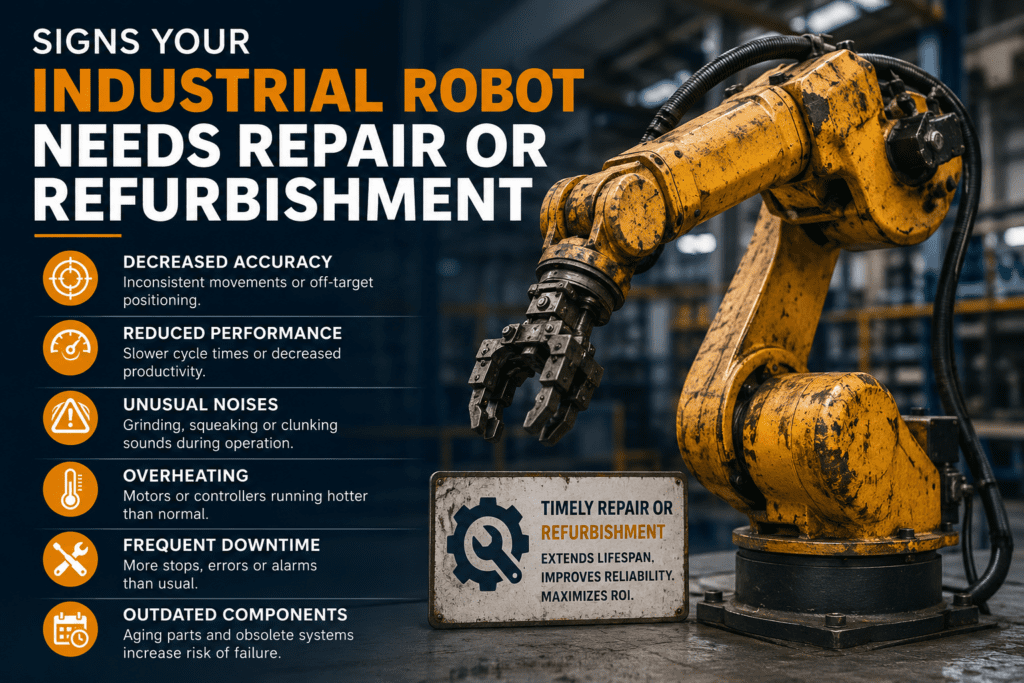
Common Signs Your Robot Needs Repair or Refurbishment
1. Unusual Noise During Operation
One of the earliest warning signs of robot wear is abnormal noise.
You may notice:
- Grinding sounds
- Clicking noises
- Popping
- Excessive humming
- Vibration-related sounds
These noises often indicate:
- Worn gears
- Bearing damage
- Lack of lubrication
- Grease contamination
- Mechanical wear inside robot axes
Ignoring unusual sounds can eventually lead to major gearbox or servo failures.
2. Excessive Vibration or Jerky Movement
Industrial robots should move smoothly and consistently. If movement becomes rough, inconsistent, or shaky, it may indicate internal mechanical wear or control issues.
Common causes include:
- Worn reducers
- Servo motor issues
- Encoder problems
- Mechanical backlash
- Calibration loss
Excessive vibration can also negatively impact weld quality, part consistency, and production accuracy.
3. Repeat Faults and Alarms
Frequent robot alarms should never be ignored.
Common recurring faults may involve:
- Servo overloads
- Encoder communication errors
- Axis faults
- Overtravel alarms
- Collision detection
- Motor temperature warnings
Repeated alarms are often symptoms of larger developing problems. Resetting alarms repeatedly without investigating root causes can lead to severe damage over time.
4. Inconsistent Welds or Product Quality
For robotic welding systems, declining weld quality is often one of the first visible indicators of robot wear.
Signs may include:
- Undercut
- Inconsistent bead appearance
- Missed weld locations
- Inaccurate positioning
- Poor repeatability
Mechanical wear, loose components, calibration drift, or axis backlash can all contribute to reduced robotic accuracy.
In many cases, customers blame weld parameters when the actual issue is robotic wear or maintenance neglect.
5. Grease Leaks or Contamination
Industrial robots rely heavily on proper lubrication inside gearboxes and robotic joints.
Warning signs include:
- Grease leaking from axes
- Burnt or discolored grease
- Metal contamination in grease
- Dry or hardened grease
- Seal failures
Old or contaminated grease loses its protective properties and accelerates wear on expensive internal components.
Routine grease replacement and flushing are critical preventive maintenance tasks that help extend robot life.
6. Increased Downtime
If your robot is requiring frequent troubleshooting, resets, or maintenance calls, it may be approaching the point where refurbishment becomes more cost-effective than repeated repairs.
Frequent downtime can lead to:
- Lost production
- Missed deadlines
- Increased labor costs
- Reduced customer confidence
A properly refurbished robot can often restore reliability and performance at a fraction of replacement cost.
7. Robot Is Reaching High Cycle Counts or Age
Even if a robot appears operational, age and cycle count matter.
Industrial robots running for years in production environments naturally experience wear on:
- Bearings
- Harnesses
- Gearboxes
- Motors
- Seals
- Reducers
Many companies wait until catastrophic failure occurs before addressing wear. Preventive refurbishment allows components to be serviced before expensive failures happen.
What Is Robot Refurbishment?
Robot refurbishment involves restoring a robotic system back toward like-new operational condition through inspection, repair, replacement, cleaning, testing, and preventive maintenance.
Refurbishment may include:
- Full grease replacement
- Internal inspections
- Bearing replacement
- Seal replacement
- Harness repair
- Motor repair
- Encoder replacement
- Calibration verification
- Cosmetic restoration
- Comprehensive testing
At 4C Robotics & Repair, we focus on extending robot lifespan while helping customers avoid the massive cost of replacement robots.
Benefits of Robot Refurbishment
Lower Cost Than Replacement
New industrial robots can cost tens of thousands of dollars. Refurbishment often restores reliability at a significantly lower investment.
Extended Equipment Life
Proper refurbishment helps maximize the lifespan of robotic assets already integrated into your facility.
Reduced Downtime
Proactive repairs and refurbishment help prevent unexpected breakdowns that disrupt production.
Improved Reliability
A refurbished robot often operates smoother, more consistently, and more accurately than a neglected unit.
Better Return on Investment
Manufacturers invest heavily in robotic automation. Refurbishment helps protect that investment long term.
Preventive Maintenance Is Key
The best way to avoid major robotic failures is through routine preventive maintenance.
A proper PM program should include:
- Grease inspections and replacement
- Axis inspection
- Cable inspection
- Calibration checks
- Software backups
- Alarm history review
- Mechanical wear evaluation
- Safety system inspections
Preventive maintenance identifies problems early before they become major failures.
Final Thoughts
Industrial robots are essential assets in modern manufacturing, but they require proper care to remain reliable and productive. Waiting until failure occurs often results in higher costs, longer downtime, and unnecessary production loss.
If your robot is showing signs of wear, unusual movement, alarms, leaking grease, or declining performance, it may be time for repair or refurbishment.
At 4C Robotics & Repair, we provide expert robotic repair, refurbishment, preventive maintenance, and automation support backed by more than 14 years of industry experience.
Protect your investment. Reduce downtime. Keep production moving.
“Family Built. Customer Driven. Robotics Done Right.”